Most Muslim parents in the US, UK, Canada, and Australia know their children should learn Quran. Fewer have a clear picture of what the rest of a child's Islamic education should look like which topics come first, which can wait, and what's realistic at each age. Without that picture, learning tends to become random: a few duas here, a Seerah story there, with no sense of whether anything is building toward something.
This guide lays out a practical, age-by-age framework for Islamic Studies alongside Quran learning. It isn't the only valid order, and every family will adapt it but it gives you a structure to work from rather than guessing.
How This Framework Works
Islamic Studies for children generally covers a handful of areas: Aqeedah (core beliefs), Fiqh (practical rulings, especially around prayer and purification), Seerah (the life of the Prophet ﷺ), Hadith, Akhlaq (character and manners), and Duas (daily supplications). The key principle is that what's taught should match what a child can actually understand and apply at their age abstract theology at age five doesn't stick, while stories and habits do.
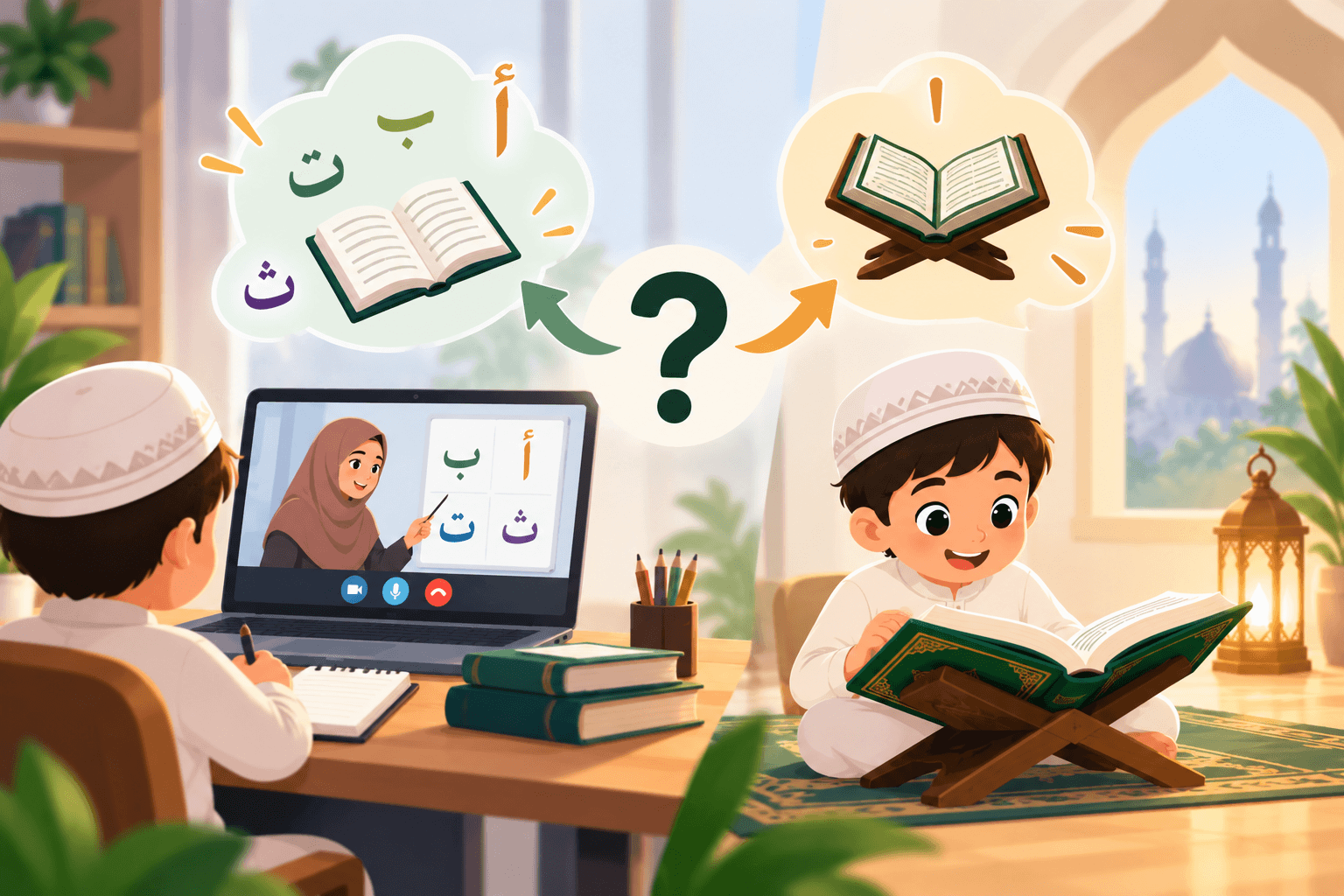
Quran reading runs alongside all of this as its own track — see our Nazra-e-Quran program for that side and this framework focuses on everything else.
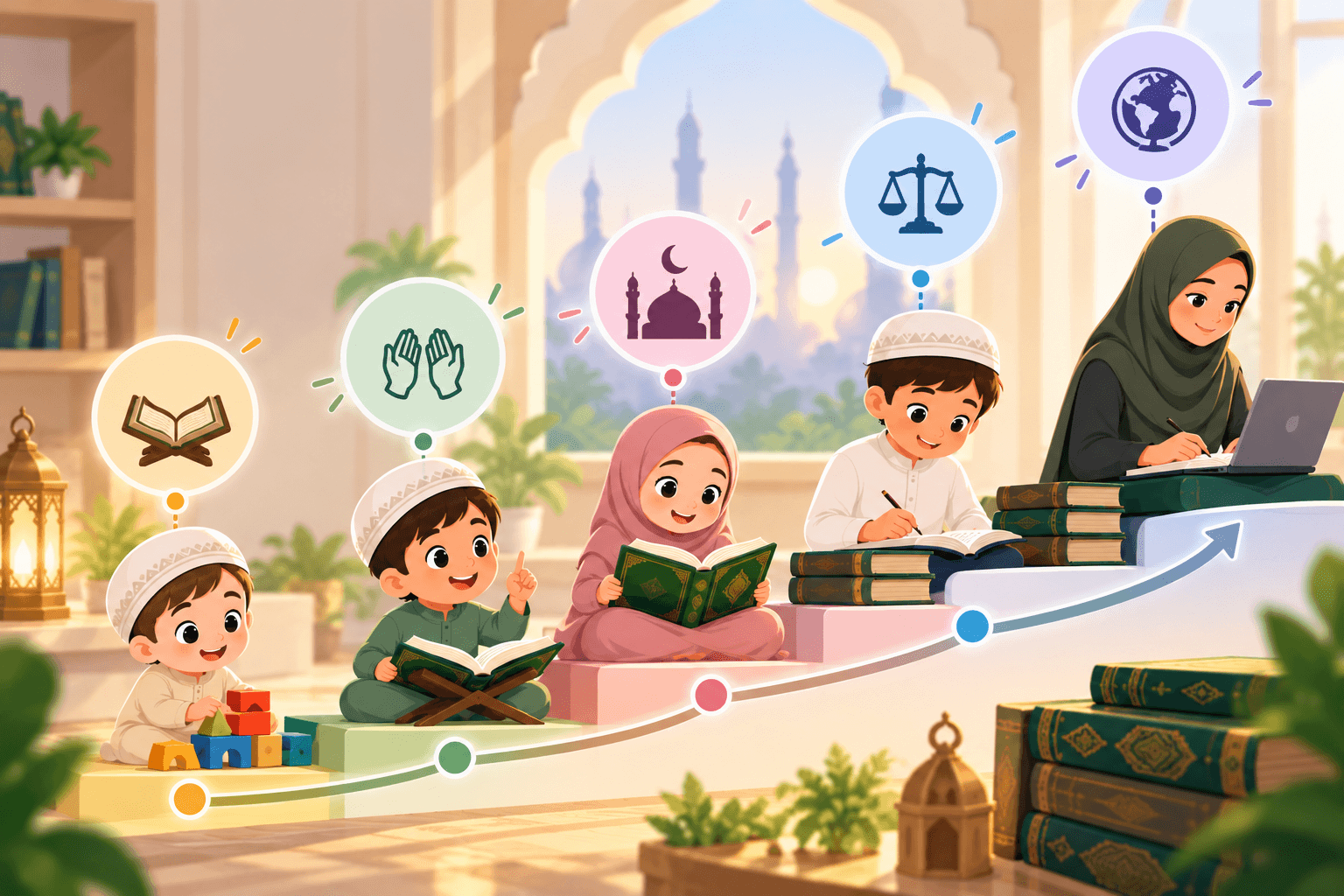
Age-by-Age Islamic Studies Framework
Ages 4–6: Habits, Stories, and Short Duas
At this age, children learn through repetition, stories, and imitation rather than explanation. Realistic goals include:
- Core beliefs in simple language Allah is One, Allah created everything, Allah sees and loves us. Short, concrete statements, not theological discussion.
- Everyday duas before eating, after eating, before sleeping, entering and leaving the home, and similar short supplications connected to moments the child experiences daily.
- Basic manners (Akhlaq) saying Salam, honesty, sharing, kindness to parents — taught mainly through modeling and gentle reminders.
- Simple stories of the prophets, told as stories first, with lessons implied rather than lectured.
- The names of the five pillars, without needing full detail yet.
Ages 7–9: Building the Foundations of Practice
This is when children can begin learning how to actually practice, not just what to believe. Realistic goals include:
- Wudu and salah, step by step usually the most important practical skill at this stage, ideally with a parent praying alongside the child so it feels like a shared habit rather than a task.
- The five pillars in more detail, including why each exists.
- Seerah in a connected sequence moving from isolated stories to a rough timeline of the Prophet's ﷺ life, beginning with birth and early life through to the Hijrah.
- A small set of short, well-known hadith about character and daily conduct. Our Must Know Hadees page is a useful starting resource for parents building this up at home.
- More duas and the six articles of faith, explained in simple terms.
Ages 10–12: Understanding the “Why”
Children at this age can handle more reasoning, and they often start asking sharper questions. Realistic goals include:
- Fiqh of daily worship conditions and nullifiers of wudu, details of salah, fasting basics, and the rules around zakah at an introductory level.
- Fuller Seerah, including the Madinan period, with attention to the character and decisions of the Prophet ﷺ and the Companions.
- Basic Aqeedah with simple evidence not debate or philosophy, but being able to answer a child's honest questions about why we believe what we believe.
- Introduction to Arabic language, if the family wants children to eventually understand what they recite see our guide on whether kids need Arabic before Quran classes and the Arabic Language program.
- Responsibility and etiquette as children approach puberty, gradual, calm introduction to the responsibilities that come with it.
Ages 13–16: Depth, Questions, and Identity
Teenagers need content that respects their ability to think, and that prepares them for questions they'll face from peers, school, and media. Realistic goals include:
- Deeper Fiqh across worship and daily transactions, taught with reasoning rather than only rules.
- Hadith with context — understanding what a hadith says, why it was said, and how scholars have understood it.
- Aqeedah and answering common questions thoughtfully, in an environment where asking questions is welcomed rather than discouraged.
- Islamic history and the broader Ummah, including how Muslims have lived in minority and majority contexts.
- Arabic language study for those who want direct access to the Quran and classical texts.
- Tafsir introduction understanding the meanings and context of selected passages they already recite.
For students who want to go much further, the traditional path leads toward a full structured program like our online Aalim program, which covers these disciplines systematically over several years.
Where Hifz Fits In
Hifz (memorization) is a separate track that runs alongside, not instead of, Islamic Studies. If your child is memorizing, the framework above still applies it simply needs to be balanced against the daily time Hifz demands. Our Hifzul Quran program and our guide on Nazra vs Hifz cover how to think about that balance.
Common Mistakes When Planning Islamic Studies at Home
Teaching Topics Before the Child Is Ready
Detailed Fiqh rulings or abstract theology at age six usually produces confusion or boredom, not understanding. Waiting a year or two often produces better results than pushing early.
Treating Islamic Studies as Only Memorizing Facts
Knowing a list of pillars or hadith matters less than whether the child can explain and apply them. Conversation and practice beat repetition alone.
Skipping Character in Favor of Content
A child who knows many rulings but lacks honesty and kindness has missed the point of the curriculum. Akhlaq deserves equal weight at every age.
Having No Plan at All
Even a loose plan “this year, wudu and salah; next year, Seerah timeline” is far better than random topics, because it ensures nothing important is missed.
Fitting This Into Real Family Life
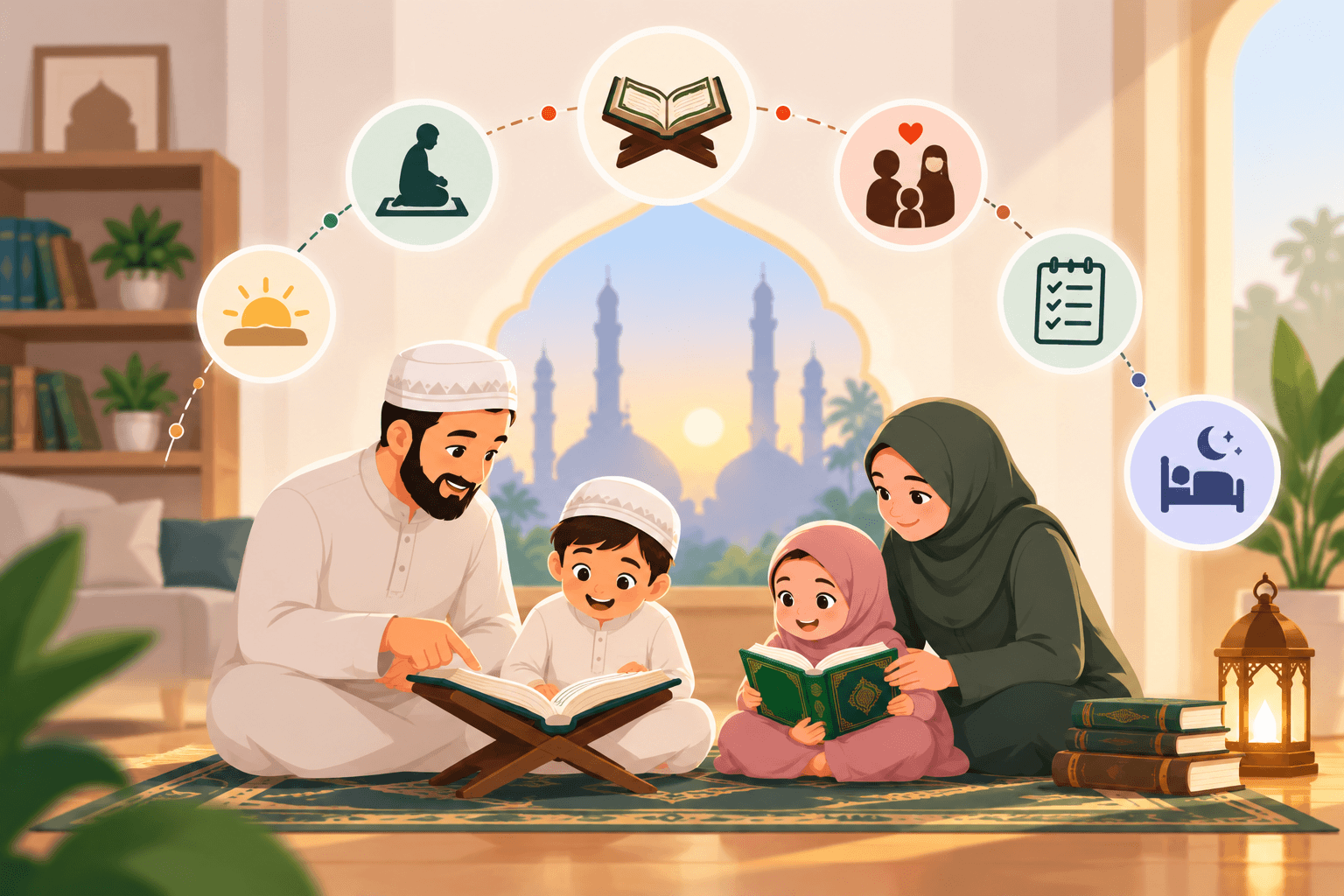
A curriculum only works if it fits your family's actual schedule. Most families find that a few focused sessions per week, reinforced by everyday conversation and prayer together, is far more sustainable than a heavy daily schedule. Our guide on building a daily Islamic homeschooling routine covers practical ways to do this, and our guide on how many hours a day kids should study Quran helps with realistic time expectations on the Quran side.
If you'd rather not design this alone, a tutor can help assess where your child currently stands and suggest a sensible starting point. You can learn about who would work with your child on our Meet the Tutors page, and a free trial class is an easy way to start that conversation.
Related Reading
If you're also deciding when formal lessons should begin, see our guide on the best age to start Quran classes.
Getting Help With Structure
Not sure where your child should start? Talk to us about your child's Islamic Studies and we'll help you find a sensible starting point for their age and current level.
FAQ
What Islamic Studies topics should a 5-year-old learn?
Simple beliefs in child-friendly language, everyday duas, basic manners, and short stories of the prophets taught through repetition, modeling, and storytelling rather than formal explanation.
When should children start learning Fiqh?
Basic practical Fiqh around wudu and salah usually begins around ages 7–9, with more detailed rulings introduced from around ages 10–12 once children can follow reasoning behind them.
Is Islamic Studies separate from learning to read the Quran?
Yes, they're related but distinct tracks. Quran reading (Nazra) teaches accurate recitation, while Islamic Studies covers beliefs, practice, character, and history, and the two are best pursued alongside each other.
How much time per week should Islamic Studies take?
It varies by age and family, but a few focused sessions per week plus daily conversation and prayer together is a realistic and sustainable pattern for most families.
Can Islamic Studies be learned online?
Yes, live one-on-one online lessons can cover all of these topics effectively, provided the tutor is qualified and the content is structured appropriately for the child's age.