If you're new to structuring your child's Quran education, these two terms come up constantly and the confusion is completely understandable, since many programs use them loosely or interchangeably. They're actually two distinct stages with different goals, different daily demands, and different readiness requirements.
Getting this right matters, because starting a child on the wrong one too early is one of the most common reasons families end up frustrated and restarting from scratch.
This guide breaks down exactly what each program involves, how they differ in daily commitment, and a practical way to decide which one is right for your child right now.
What Is Nazra Quran?
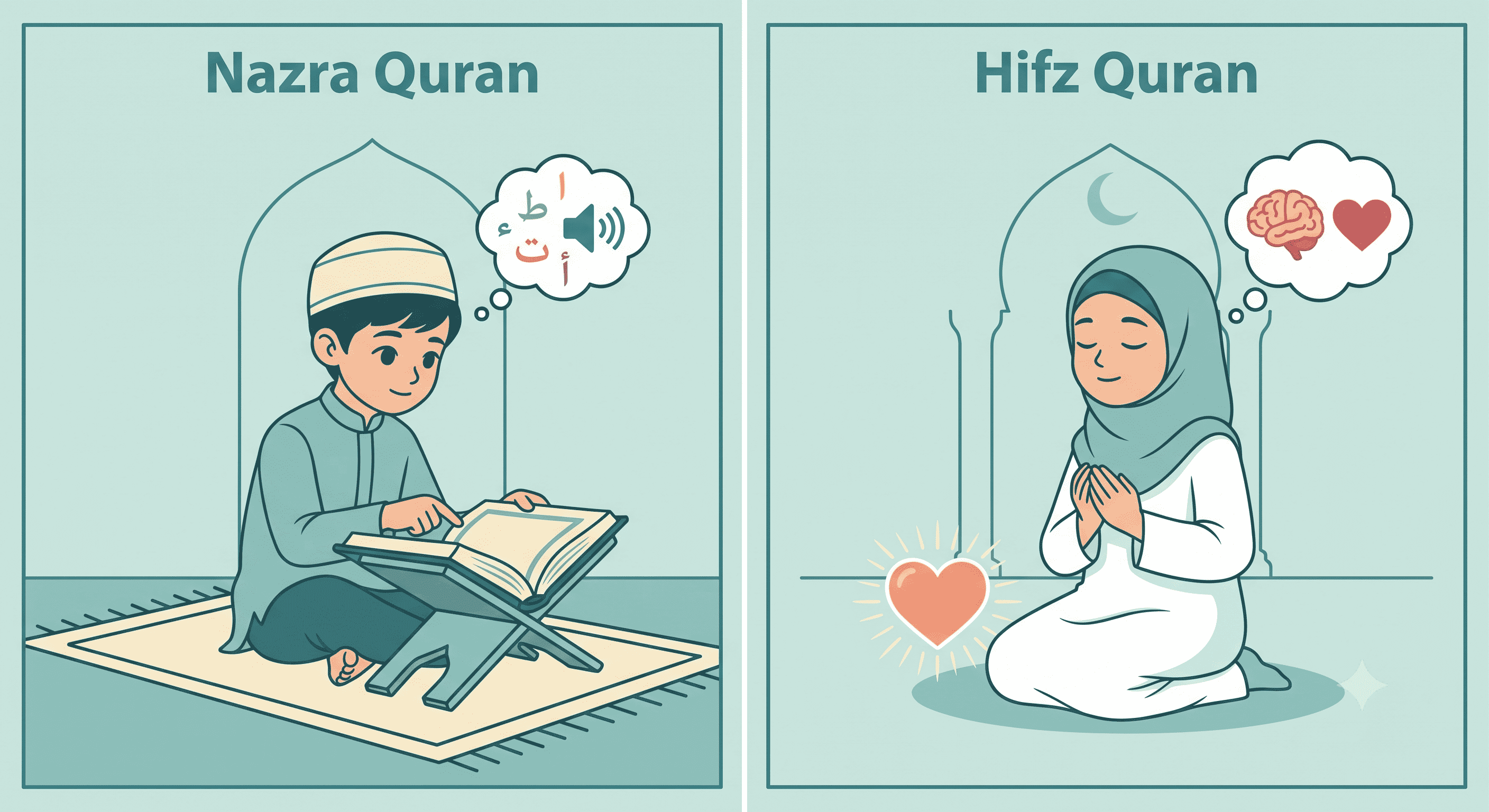
Nazra means “to read while looking” it refers to learning to read the Quran fluently, directly from the mus'haf (the physical Quran text), with correct pronunciation and Tajweed rules. This is the foundational stage almost every child goes through before anything else. A student completing Nazra can open the Quran and recite any page accurately, but isn't expected to have it memorized.
Our Nazra-e-Quran program is built specifically around this stage starting with Arabic letter recognition and Noorani Qaida for complete beginners, and progressing through fluent, Tajweed-correct recitation of the full Quran while reading from the text.
What Is Hifz Quran?
Hifz means memorization the process of committing the entire Quran to memory, to the point where a student can recite any portion without looking at the text at all. This is a significantly longer, more intensive commitment than Nazra, typically taking two to five years depending on the student's age, pace, and daily hours dedicated to it.
Our Hifzul Quran program is structured around this specific goal, with a dedicated daily revision system, since Hifz retention depends far more on consistent repetition than on any other single factor.
The Core Difference, Simply Put
Think of it this way: Nazra is about being able to read the Quran correctly. Hifz is about being able to recite it entirely from memory, without the text in front of you. Nazra is a prerequisite most students complete before beginning Hifz you generally can't memorize accurately what you can't already read accurately, since Hifz builds directly on the pronunciation and Tajweed habits established during Nazra.
| Nazra Quran | Hifz Quran | |
|---|---|---|
| Goal | Fluent, accurate reading from the text | Full memorization, recited without the text |
| Typical duration | 1–2 years | 2–5 years |
| Daily commitment | Shorter, more flexible | Longer, requires strict daily consistency |
| Prerequisite | Basic Arabic letter recognition | Completed or near-complete Nazra |
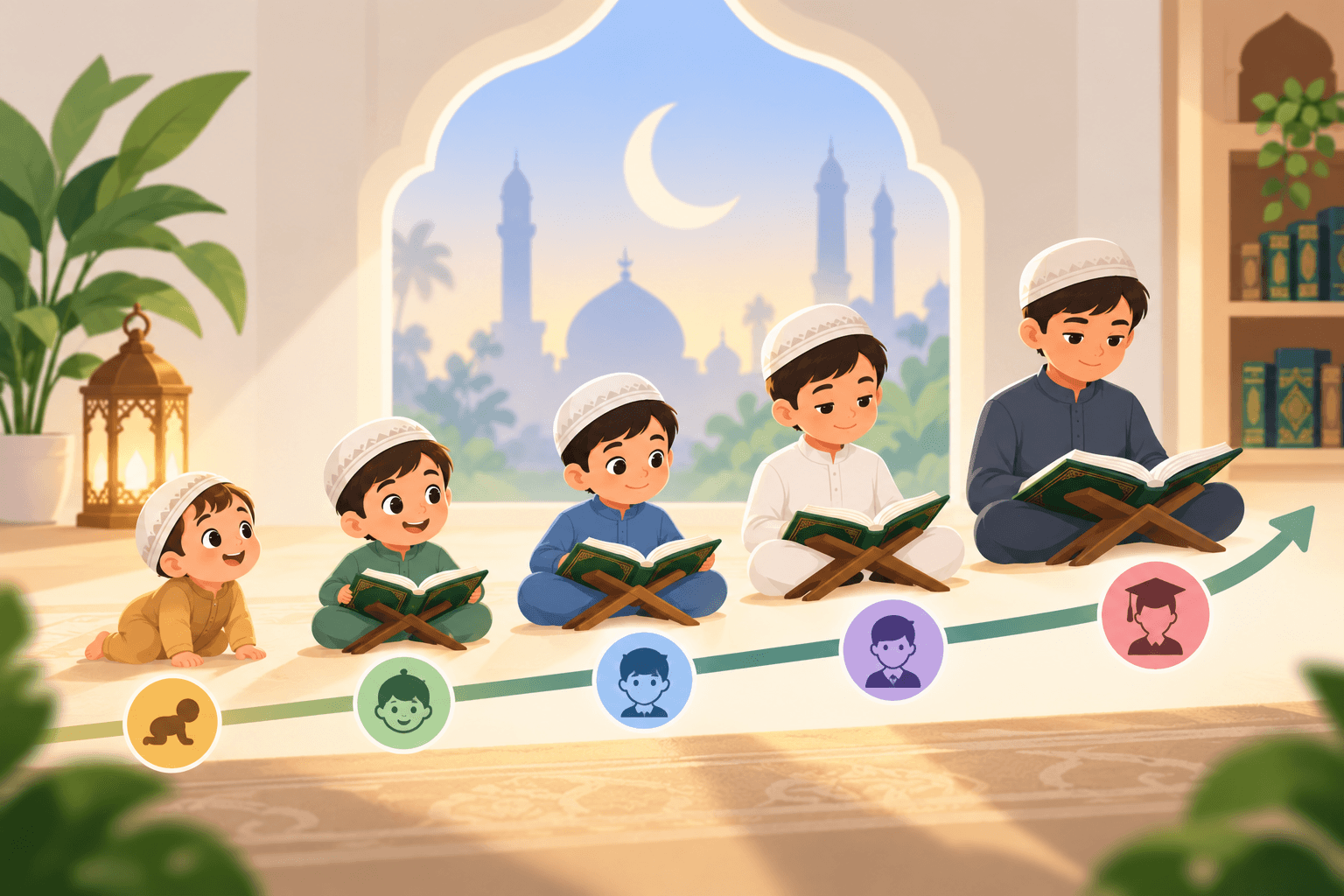
| Best started | Early childhood, ages 5–8 | After solid Nazra foundation, often ages 7–10+ |
Which Should My Child Start With?
For the vast majority of children, the answer is Nazra first, always regardless of whether Hifz is the eventual long-term goal. Attempting to start Hifz before a child can read fluently and accurately almost always leads to memorizing mistakes alongside the correct text, which then have to be painstakingly unlearned later. This is one of the most common and avoidable setbacks in a child's Quran journey.
A useful way to think about readiness for Hifz specifically:
- Your child can read most of the Quran fluently without needing to sound out individual letters
- Tajweed rules are largely internalized, not something they're actively thinking through word by word
- Your child has expressed genuine willingness, since Hifz requires sustained daily effort over years, and forcing an unwilling child rarely produces lasting results
- Your family can realistically commit to the daily consistency Hifz demands this is as much a family-readiness question as a child-readiness one
If your child doesn't yet meet most of these, staying focused on Nazra and only considering Hifz once the foundation is genuinely solid will actually get them to Hifz-ready faster than rushing in early.
Can a Child Do Both at the Same Time?
In principle yes, and some programs structure it that way but in practice, splitting focus between learning to read fluently and simultaneously memorizing tends to slow down progress in both. Most experienced tutors, including ours, recommend a sequential approach: solidify Nazra first, then transition fully into Hifz once the reading foundation is strong. This isn't about rigid rules it's simply what tends to produce faster, more durable results based on how memorization actually works alongside developing reading fluency.
What Happens After Nazra, If Hifz Isn't the Goal?
Not every family's goal is memorizing the entire Quran, and that's a completely legitimate choice. Many students complete Nazra and then move into broader Islamic education Tajweed refinement, Arabic language study to understand what they're reading, or general Islamic Studies covering Fiqh, Seerah, and Hadith. Fluent Quran reading on its own is a genuine, complete accomplishment, not simply a “stepping stone” that's incomplete without Hifz on top of it.
How Long Does Each Stage Actually Take?
This varies significantly by age, prior exposure, and consistency of practice, but as a general guide:
- Nazra, started around age 5–6 with consistent daily practice, typically takes 1–2 years to reach fluent, accurate reading
- Hifz, started after a solid Nazra foundation, typically takes 2–5 years depending on daily hours committed and the child's pace
These are broad ranges, not guarantees a tutor who assesses your specific child can give you a far more realistic estimate than any general timeline. If you're weighing how much daily time either stage realistically requires, our earlier guide on how many hours a day kids should study Quran breaks this down by age group in more detail.
It's worth saying directly: there's no reward in rushing a child into Hifz before they're ready, and no failure in a family deciding Nazra alone is the right goal for their child. Every child's pace is different, and forcing timeline pressure whether self-imposed or from comparing to other families tends to backfire more often than it helps.
If you've noticed early signs of frustration or disengagement while deciding on this path, our guide on recognizing when a child is losing interest in Quran classes covers how to course-correct before it becomes a bigger issue.
How We Help You Decide
If you're unsure whether your child is ready to begin Hifz, or should continue building their Nazra foundation, our tutors assess this directly in a trial session rather than assuming based on age alone. You can learn more about who would be working with your child on our Meet the Tutors page, or read how other families navigated this same decision on our Student Stories page.
Related Reading
This post connects closely with our guides on how many hours a day to spend on Quran study, recognizing disengagement early, and choosing between online and local mosque classes — useful reading whichever stage your child is at.
Not Sure Which Stage Fits Your Child?
A free trial class lets our tutors assess your child's current reading level directly, so you get a realistic recommendation for Nazra, Hifz, or continued foundation building rather than guessing based on age alone.
FAQ
What age should a child start Nazra Quran?
Most children begin around ages 5–6, once they can recognize letters and hold focus for a short structured session, though readiness varies by child.
Can a child start Hifz without completing Nazra first?
It's strongly discouraged. Starting Hifz before reading fluency is solid usually results in memorizing pronunciation mistakes that are difficult to correct later.
How do I know if my child is ready to start Hifz?
Key signs include fluent reading without sounding out letters, internalized Tajweed rules, and genuine willingness to commit to sustained daily practice a tutor assessment can confirm this more precisely.
Is it bad if my child only completes Nazra and never starts Hifz?
Not at all. Fluent Quran reading is a complete, valuable accomplishment on its own, and many families choose to focus on broader Islamic education instead of memorization.
How long does it take to memorize the entire Quran through Hifz?
Typically 2–5 years, depending on the child's age, daily time committed, and consistency, though this varies significantly by individual pace.