“When should I start my child on Quran classes?” is one of the first questions almost every Muslim parent asks and one of the most inconsistently answered, since advice ranges from “as early as possible” to “wait until they can sit still for 30 minutes.” The honest answer sits somewhere in between, and depends more on specific readiness signs than on a fixed age number.
This guide covers what actually matters when deciding timing, realistic expectations by age group, and how to know if your child is ready to begin or ready for the next stage, if they've already started.
Why “Age” Alone Isn't the Full Answer
Two children can be the same age and have very different readiness for structured Quran learning, depending on attention span, prior exposure to Arabic sounds, and general temperament. Age is a useful starting reference point, but readiness signs matter more than the calendar. That said, most families do find age-based benchmarks helpful for initial planning, so here's a realistic breakdown.
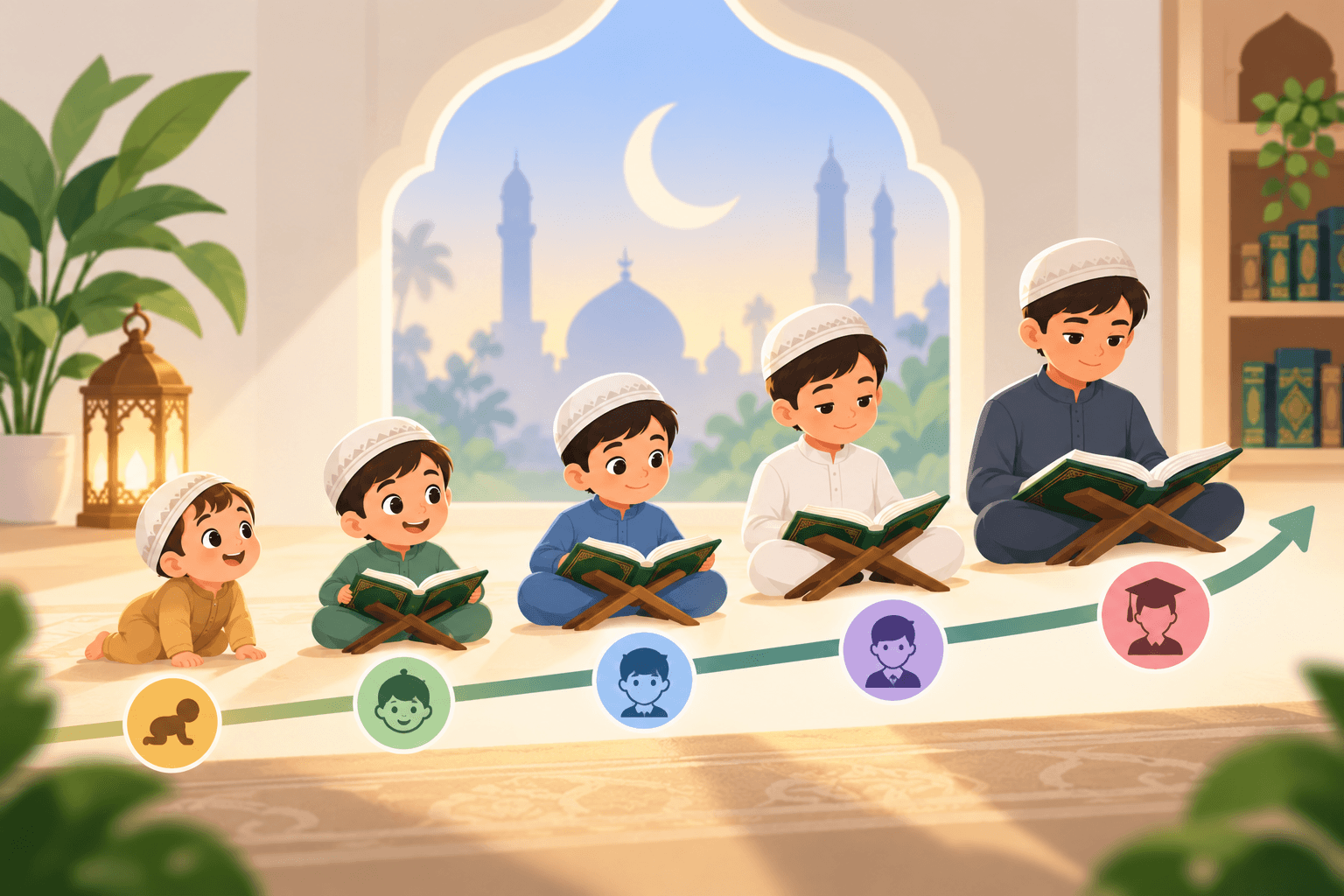
Age-by-Age Guide to Starting Quran Education
Ages 2–4: Early Exposure, Not Formal Lessons
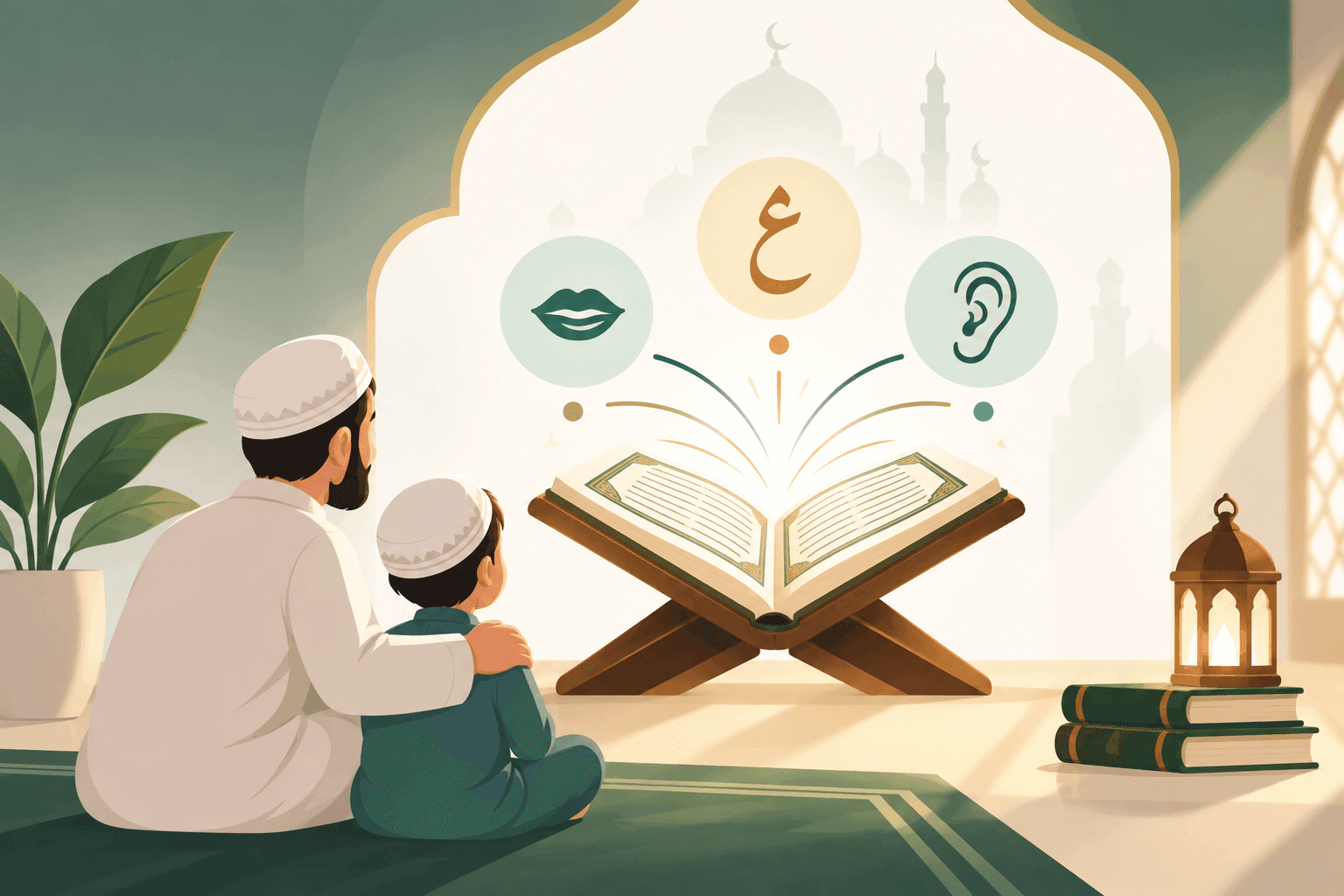
At this stage, formal structured classes are generally too early — but early exposure through simple recitation heard at home, short duas repeated aloud, and Arabic sounds introduced casually through songs or games builds valuable familiarity before formal learning begins. This isn't wasted time; children absorb rhythm and sound patterns at this age even without structured instruction.
Ages 4–6: The Common Starting Point for Formal Classes
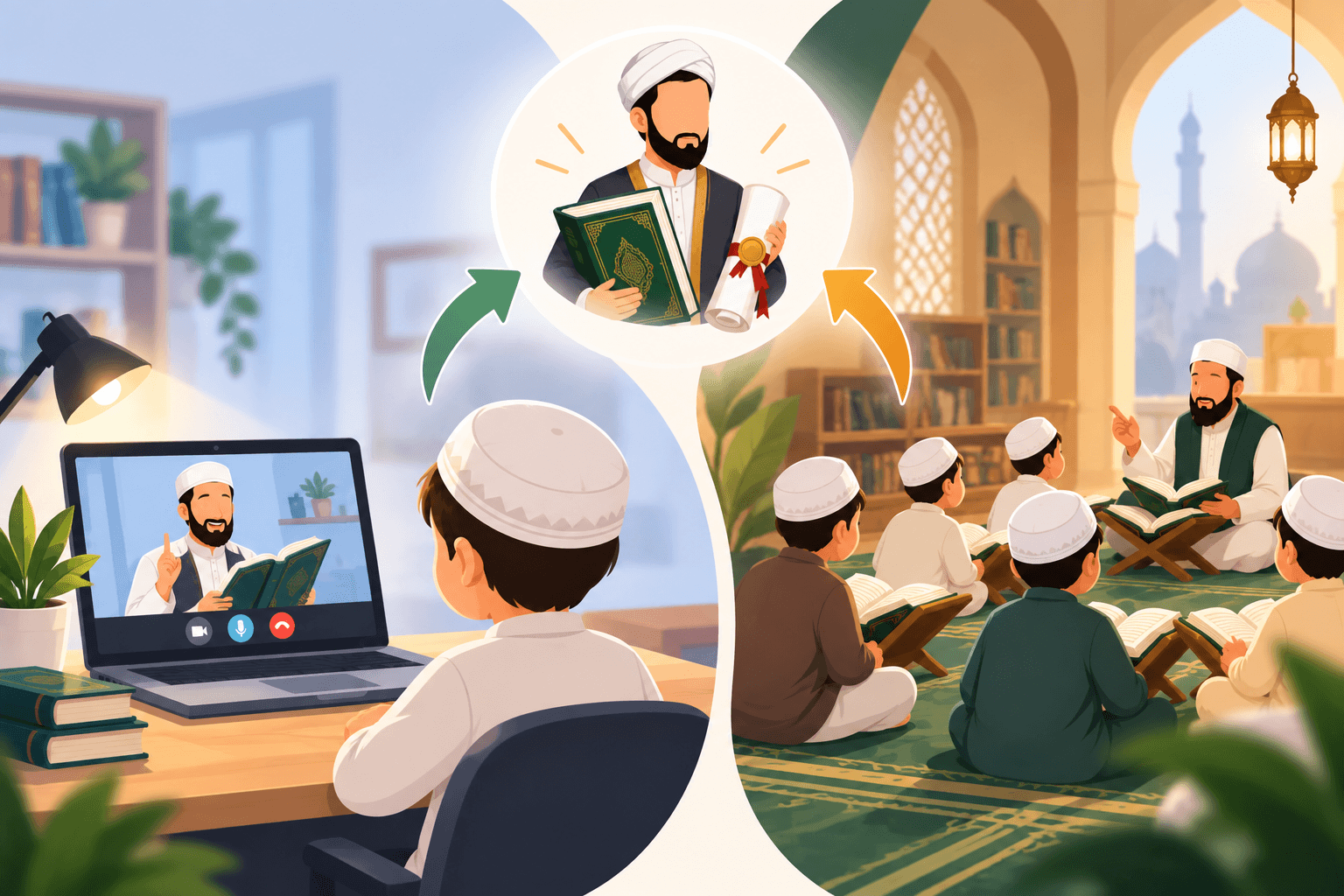
This is when most children begin structured learning typically starting with Arabic letter recognition and Noorani Qaida, the foundational step before reading full Quranic text. Readiness signs to look for at this age include being able to sit and focus for roughly 10–15 minutes, basic letter or shape recognition ability (similar to pre-reading skills in regular school), and general willingness to engage with a new adult teacher, whether in person or online.
If your child isn't quite ready at exactly this age, that's completely normal starting a few months later with genuine readiness produces better results than starting on schedule with a resistant, unready child.
Ages 6–9: Building Toward Fluent Reading
By this stage, most children who started around age 4–6 are progressing through structured Nazra-e-Quran instruction, working toward fluent, Tajweed-correct reading of the full Quran. Children starting fresh at this age typically progress faster through the early foundational stages than younger beginners, since general reading and focus skills are more developed.
Ages 8–12: Considering Hifz, If That's the Family's Goal
Once a child has a solid Nazra foundation fluent reading without needing to sound out letters, internalized basic Tajweed this is typically when families consider starting formal Hifz (memorization). Starting Hifz before this foundation is solid is one of the most common avoidable setbacks, since it often means memorizing pronunciation errors alongside the text. Our detailed guide on Nazra vs Hifz covers exactly how to assess this readiness.
Teens: Never “Too Late” to Start or Deepen Learning
A common misconception is that Quran education needs to happen exclusively in early childhood to be effective. Teenagers starting Quran reading for the first time, or deepening existing knowledge through Arabic language study or broader Islamic Studies, absolutely can and do make strong, meaningful progress — often faster than younger children in some respects, given more developed focus and abstract reasoning ability.
Signs Your Child Might Be Ready to Start (At Any Age)
Rather than relying purely on age, these practical signs tend to be more reliable indicators of readiness:
- Can sit relatively still and focused for at least 10 minutes without significant difficulty
- Shows curiosity about Arabic sounds, letters, or Quran recitation heard at home or at the mosque
- Can follow simple, multi-step instructions from an adult
- Demonstrates basic willingness to try, even if initial attempts are imperfect
If most of these apply, your child is likely ready to begin, even if they don't perfectly match the “typical” age range above.
What If I Started Too Early or Too Late?
If you started earlier than ideal and your child is struggling or resistant, this is fixable reducing session length significantly, or pausing formal structure briefly in favor of casual exposure, often resets things without any lasting setback. Our guide on recognizing signs of disengagement covers this in more detail.
If you're starting later than the “typical” age whether your child is 9, 12, or a teenager just beginning there's no meaningful disadvantage to address here. Older beginners often progress through foundational material faster than younger children, since general learning and focus skills are already more developed. The idea that a “late start” creates a permanent gap isn't well-supported by what we actually see in practice.
Should Multiple Children Start at the Same Time?
Families with children of different ages often wonder whether to start everyone together or stagger the start. In practice, staggering based on individual readiness rather than forcing a younger sibling to start early just to match an older one, or holding an older child back to wait for a younger one — tends to produce better outcomes for both. Each child progressing at a pace matched to their own readiness, even if that means different start dates, generally works better than a forced shared timeline.
Building This Into Daily Family Life
Starting formal classes is only one part of the picture pairing it with a consistent home routine tends to reinforce progress significantly. Our guide on building a daily Islamic homeschooling routine covers practical ways to integrate Quran learning into everyday family life alongside formal instruction, regardless of what age your child starts.
Rather than applying a fixed age rule, we assess each child individually in a trial session looking at attention span, prior exposure, and general engagement to recommend a realistic starting point and pace.
You can learn more about the tutors who would work with your child on our Meet the Tutors page.
Related Reading
This guide pairs well with our posts on how many hours a day kids should study Quran, the difference between Nazra and Hifz, and building a sustainable daily Deen routine useful next reads whatever stage your child is starting at.
Not Sure If Your Child Is Ready?
If you're unsure whether your child is ready to begin, or which program fits their current stage, a free trial class is the most direct way to get a clear, honest assessment rather than guessing based on age alone.
FAQ
What is the best age to start Quran classes for kids?
Most children begin structured lessons around ages 4–6, though readiness signs like focus span and curiosity about Arabic sounds matter more than hitting an exact age.
Is it too late to start Quran classes for an older child or teenager?
No older children and teenagers often progress through foundational material faster than younger beginners, since general focus and learning skills are more developed. There's no meaningful disadvantage to starting later.
How do I know if my child is ready to start, regardless of age?
Key signs include being able to sit focused for roughly 10 minutes, curiosity about Arabic sounds or recitation, following simple instructions, and general willingness to try, even imperfectly.
Should I start Hifz at the same age as Nazra?
No Hifz should generally begin only after a solid Nazra foundation is established, typically once a child reads fluently without sounding out letters and has internalized basic Tajweed rules.
What if my child seems too young for structured classes right now?
Casual, low-pressure exposure hearing recitation at home, repeating short duas, engaging with Arabic sounds through songs — is valuable preparation, and formal structured classes can begin once readiness signs appear, even if that's later than initially planned.