The first class sets the tone. A child who walks into their first online Quran lesson relaxed and curious usually settles into the routine quickly, while one who feels nervous, rushed, or confused can form a negative impression that takes weeks to undo. The good news is that preparation doesn't need to be elaborate. A few simple steps, mostly on the parent's side, make a real difference.
This guide covers the practical setup, the right mindset, and what to expect, so your child's first session whether it's a free trial or the start of a full program — goes as smoothly as possible.
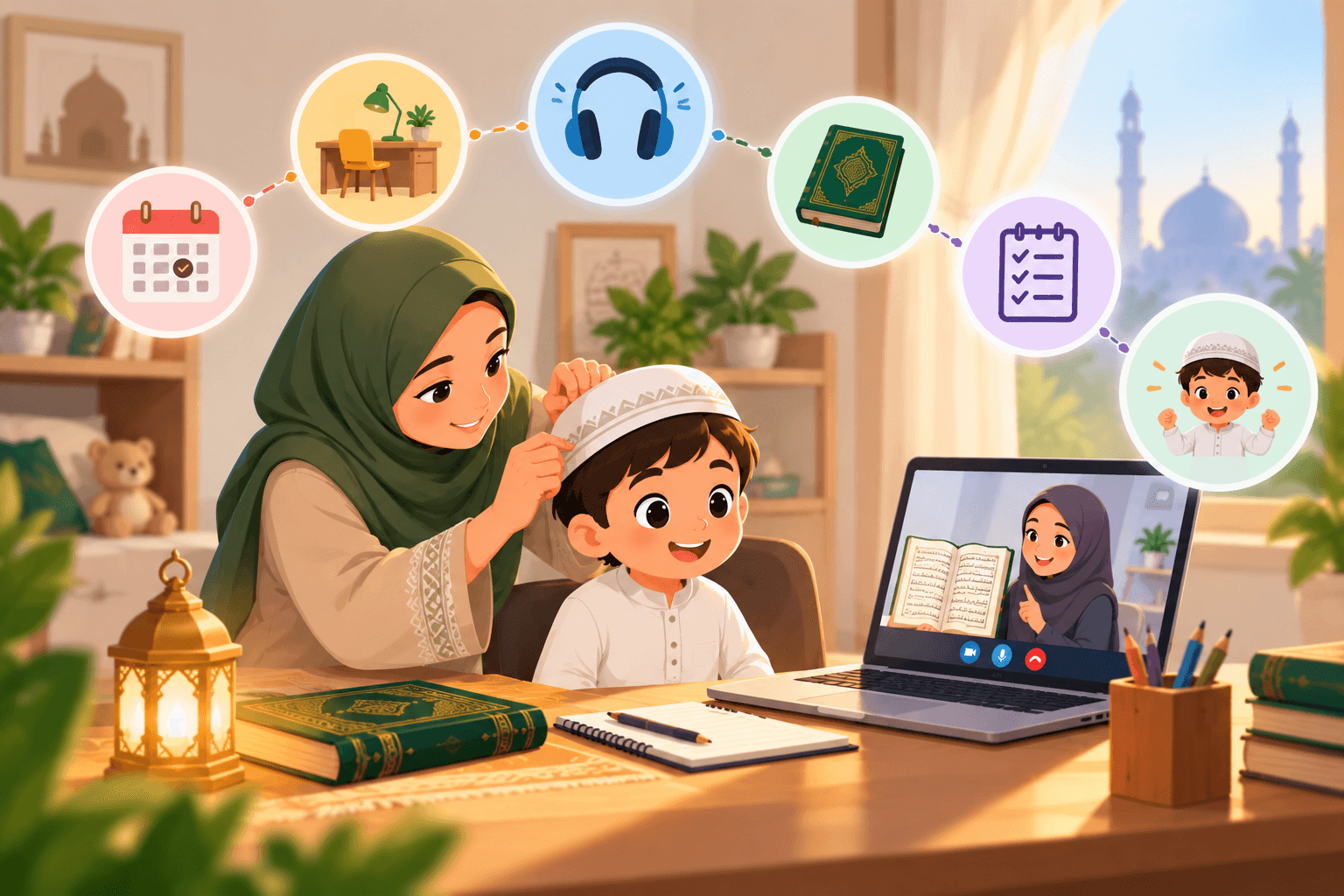
Six Steps to Prepare for the First Class
Step 1: Set Up a Simple, Distraction-Free Space
You don't need special equipment. What matters is that your child can see and hear clearly and isn't pulled away by distractions.
- A quiet corner, away from the television, siblings playing, or kitchen noise where possible.
- A stable device a laptop or tablet is usually better than a phone, since a larger screen makes it easier for the tutor to show letters and for your child to follow along.
- Working audio test the microphone and speakers beforehand. Clear sound matters more than anything else in Quran learning, since the tutor needs to hear pronunciation accurately.
- Reliable internet a quick check before class avoids the most common source of first-day stress.
- A comfortable seat at the right height, so your child isn't squinting or slouching.
Step 2: Gather the Basics
Have these ready before the session starts:
- A Quran or the learning material the tutor has shared, if any
- A notebook and pen, for younger students to practice letters or for older students to note corrections
- Water nearby, so there's no need to leave mid-lesson
- A charger plugged in, if you're using a tablet or laptop
Step 3: Talk to Your Child About What to Expect
Children handle new experiences better when they know what's coming. A short, calm conversation beforehand can ease most first-day nerves:
- Explain that they'll meet a new teacher who will help them learn to read the Quran, just like a teacher at school.
- Tell them it's okay to make mistakes, and that the teacher expects them — mistakes are how learning happens.
- Let them know the first class is mostly about getting to know each other, not a test.
Keep the tone positive and low-pressure. Avoid saying things like “you'd better focus” or “don't embarrass me,” which can create anxiety before the lesson even begins.
Step 4: Share Useful Background With the Tutor
The more your tutor knows about your child, the better the first session will go. If you can, mention:
- Your child's age and any previous Quran learning, even informal
- Whether they can already recognize Arabic letters
- Any known challenges, such as difficulty focusing for long periods our guide on teaching Quran to a child with a short attention span covers what helps in that situation
- Your family's goals — reading fluency, eventual memorization, general Islamic knowledge
This isn't about pressuring the tutor to perform; it simply lets them shape the session around your child rather than guessing.
Step 5: Be Present, but Not Hovering
For younger children especially, a parent nearby at the start helps them feel secure. A reasonable approach is to sit with your child for the first few minutes, then step back a little once they're comfortable, staying within earshot. This also lets you observe how the tutor teaches whether they're patient, clear, and responsive to your child which is exactly what a trial class is for. If you're still comparing options, our guide on how to choose the best online Quran tutor lists what to watch for.
Avoid stepping in to correct your child during the lesson unless the tutor asks. Interruptions from a parent can undermine the child's confidence and the tutor's rapport.
Step 6: Choose a Good Time of Day
Class timing affects focus more than most parents expect. Where you can, pick a slot when your child is alert and not hungry or exhausted not right after a long school day if they usually crash, and not so late that they're sleepy. Consistency matters too: a regular time each week makes the lesson part of the routine rather than a negotiation. Our guide on how many hours a day kids should study Quran helps with realistic session lengths by age.
What Actually Happens in a First Class
First sessions vary by tutor and program, but a typical trial or introductory class looks something like this:
- A friendly introduction the tutor greets your child, learns their name, and helps them feel comfortable.
- A brief assessment the tutor gently checks your child's current level, such as whether they recognize letters or can read short words.
- A small taste of learning a few letters, a short passage, or a simple Tajweed point, taught at your child's pace.
- A wrap-up the tutor shares what was covered and what a sensible starting plan might look like.
It's perfectly normal for a child to be shy, quiet, or even a little reluctant in the first session. This usually fades quickly once they're comfortable with the tutor. If you'd like to see who teaches our students, our Meet the Tutors page introduces them, and our Nazra-e-Quran program page describes where most beginners start.
After the Class: Debrief Gently
When the session ends, ask open, relaxed questions rather than quizzing your child:
- “What was your teacher like?”
- “What did you enjoy most?”
- “Was anything confusing?”
Their answers tell you far more about fit than any checklist can. If your child seems unhappy, don't jump to conclusions after one session, but do note what they say and raise it with the tutor. If reluctance continues over several weeks, our guide on signs your child is losing interest in Quran classes can help you work out whether it's a pacing issue, a routine issue, or a tutor-fit issue.
Common First-Class Mistakes to Avoid
- Treating it as a test. Pressure makes children freeze. Frame it as a friendly introduction.
- Scheduling it at a bad time. A hungry, tired, or rushed child won't show their real ability.
- Skipping the tech check. Audio or connection problems can derail a first impression for everyone.
- Over-involving yourself during the lesson. Support quietly and let the tutor lead.
- Judging the whole program on one session. A single class is a starting signal, not a final verdict but it should feel generally positive and respectful.
If you'd like your child to experience a live one-on-one session before committing to anything, you can book a free trial class with us. You can also read what other families say on our Student Stories page.
Ready to Try a Class?
Let your child experience a live one-on-one session before committing to anything. A free trial class is a relaxed, no-pressure way to see how online Quran learning feels.
FAQ
What equipment does my child need for an online Quran class?
A laptop or tablet with a working microphone, speakers, and a stable internet connection is enough, along with a quiet space, a Quran or the shared learning material, and a notebook for practice.
Should I sit with my child during their first online Quran class?
For younger children, yes sitting with them at the start helps them feel secure. Once they're comfortable, you can step back while staying nearby, and avoid interrupting or correcting during the lesson unless the tutor asks.
What if my child is shy or refuses to speak in the first class?
This is common and usually fades as the child becomes comfortable with the tutor. A good tutor will adjust, using gentle, low-pressure activities until the child feels at ease.
How long is a typical first trial class?
Trial or introductory sessions are often shorter than regular lessons — around 20 to 30 minutes which gives enough time for an introduction and brief assessment without tiring a young child.
Does my child need to know Arabic letters before the first class?
No. Many children begin with no prior knowledge at all, and the tutor will assess their current level and start from wherever they are.